Meie teenused kasutaja pilgu läbi: teenusekvaliteedi uuring UtlibQual 2024
Abstract
Seeing the library through its users’ eyes: Service quality survey UtlibQual 2024
The aim of the UtlibQual 2024 service quality survey was to understand how users of the University of Tartu Library perceive library services and what factors shape their satisfaction. A modern library is seen not only as a location for books and databases, but also as the environment for learning and spending time, where the physical space, the atmosphere and support of the staff are as important as the collections.
The largest group among the 1003 respondents included UT students. Their main reasons for visits were borrowing books, studying in the library and accessing research databases. The role of the library as the “third place”, where people simply come to stay in a pleasant environment, was also strongly stressed.
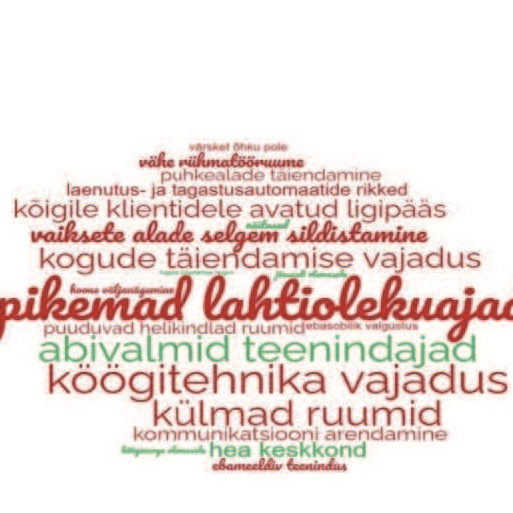
The assessments of quality indicators remained uniformly within the tolerance zone, revealing that the level of service is generally above expectations. The competence, friendliness and helpfulness of the staff were highly rated, as well as the convenience of borrowing and the suitability of the learning environment. Among some bottlenecks, many respondents listed the shortage of necessary literature in some subject areas, the need for improving the ease of use of the e-catalogue, and the wish for reasonably longer opening hours.
Satisfaction was very high – almost 90% of the respondents said that the library supports them in their studies and work. At the same time, the areas that were considered to need the largest development were the environment, collections and communication. Open-ended responses emphasised the professionalism and humane attitude of the staff and praised the comfortable environment and opportunities for independent use.
The study provides an important input for the library’s strategic planning: which services work well, which require investments, and how to direct resources in accordance with the needs and expectations of the users. In conclusion, the study confirms that the University of Tartu Library is a strong user-centred institution, but continuous development – especially in the areas of collections, environment, and digital solutions – is the key to the future of services.
Downloads