Eesti esimesed teadustööd
DOI:
https://doi.org/10.15157/tyrtar.v14i1.27228Abstract
The first Estonian scientific works
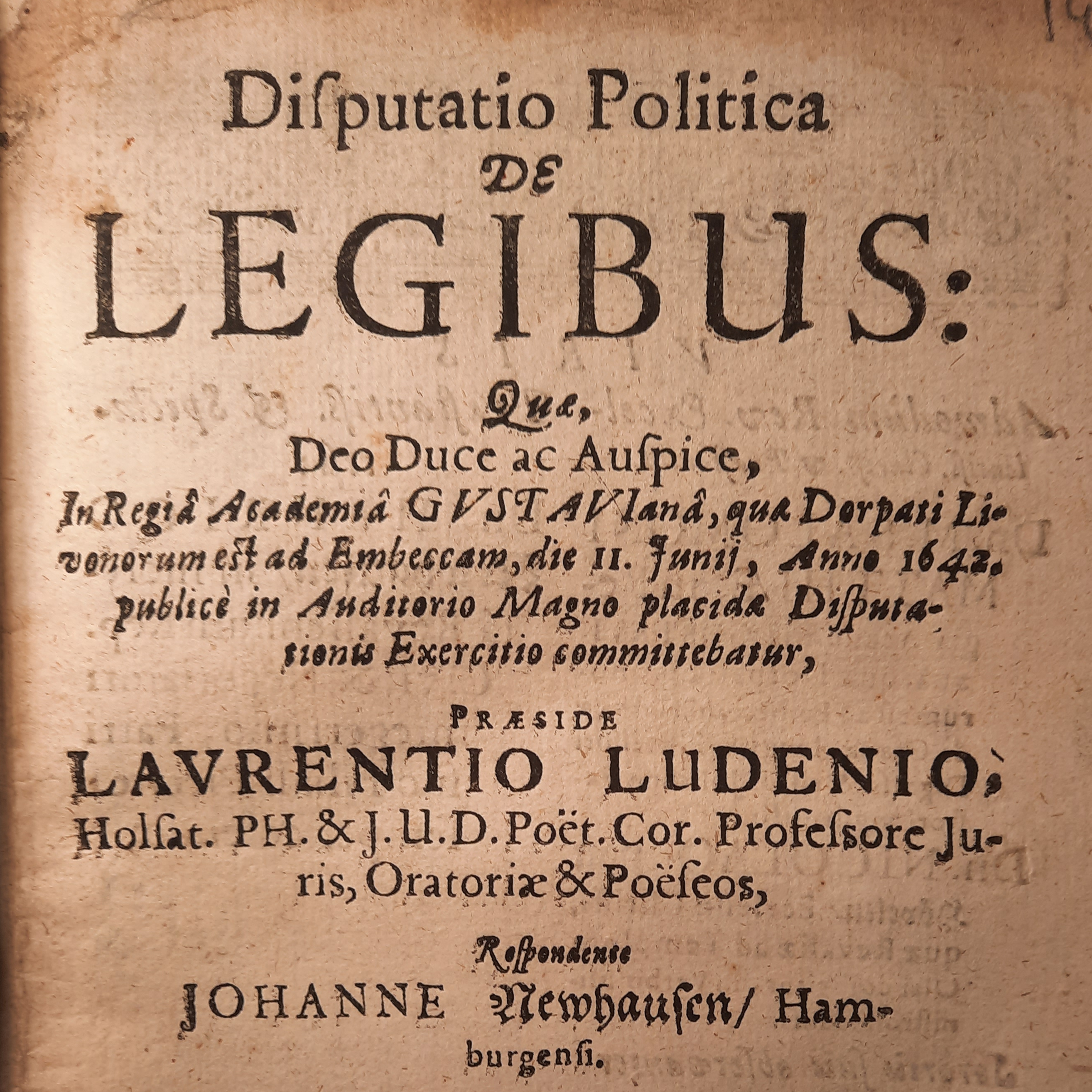
The beginning of Estonian scientific writing is closely linked to the founding of the University of Tartu in 1632. Although the 500th anniversary of the Estonian-language book emphasises the roots of the national literary culture, the first scientific works written in the Estonian area can be found among the early publications of the Tartu Academy – the disputations and orations compiled by its professors and students. During the last third of 1632, all in all 18 publications were issued in Tartu, ten of which were academic debates. Nearly 600 disputations and over 230 orations were published in the first years of the university of the Swedish time, creating a significant foundation for the history of Estonian science.
Estonia’s own science came later: Friedrich Robert Faehlmann was the first Estonian who defended his thesis in Tartu [in1827]. The first Estonian-language doctoral theses were submitted at the beginning of the 20th century by Arnold Liin and Albert Valdes. However, the academic texts created in the 17th century – although not in Estonian – were the first scientific publications on the Estonian territory.
For a long time, the disputation of Andreas Virginius and Henrik Bößman from 1632 was thought to be the first Estonian publication, but Ene-Lille Jaanson proved this dating incorrect. Instead, the “Dissertation on Countries”, written by the first student of the University of Tartu Bengt Baaz, and defended under the supervision of Jakob Skytte, can be considered to be the first Estonian publication.
1637 was a pivotal year in Estonian cultural history: the first book partly printed in Estonian (Part II of H. Stahl’s Handbook and Household Book), the first Estonian grammar, and the first known Estonian poem were all published this year. By then,
the Tartu printing house had been operating for five years, and it had already published over 70 academic works ranging from theology to mathematics and law.
Early modern disputations have often been thought to be primitive in content, but they must be assessed according to the academic standards of their time. Today, research has become much more intensive. Thanks to the University of Tartu Library, Estonia’s first scientific works have been gathered into a single corpus, and they provide valuable information on both the history of science and the history of books.
Downloads