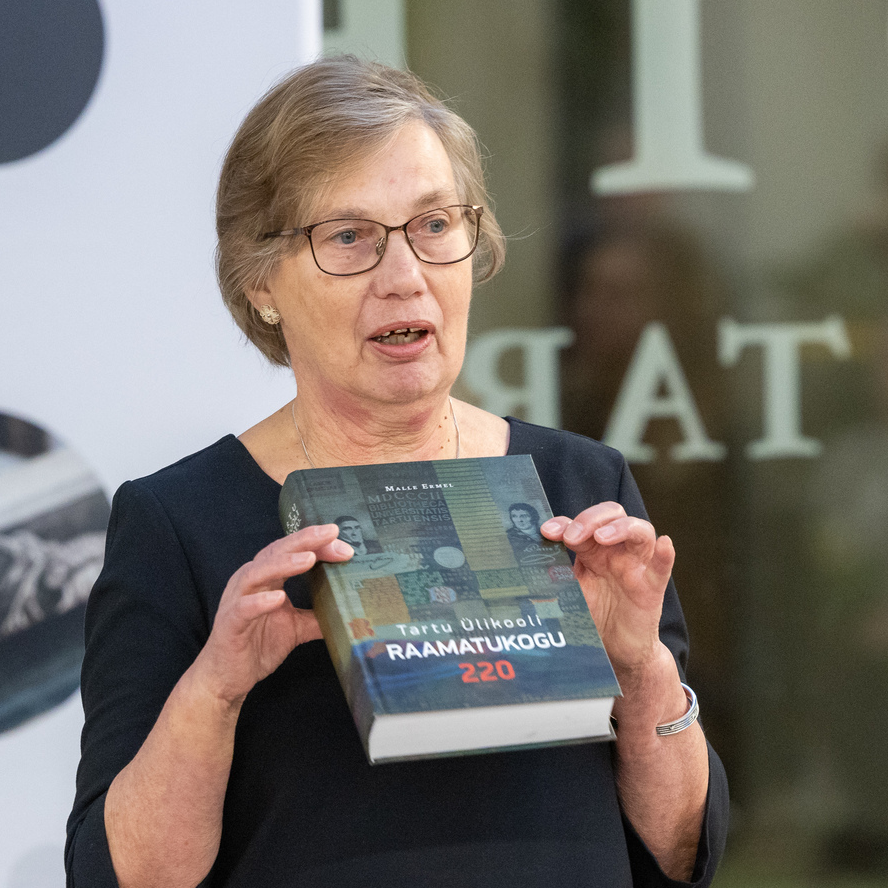
Raamatukogu 220 aastat kaante vahel.
Vestlus Malle Ermeliga
DOI:
https://doi.org/10.15157/tyrtar.v14i1.27227Abstract
The Library’s 220 Years were gathered between book covers: A Conversation with Malle Ermel
The book University of Tartu Library 220, published to mark the 220th anniversary of the University of Tartu Library, is a comprehensive and richly illustrated overview of the development of the oldest research library in Estonia. The author of the book, librarian Malle Ermel has, on more than 600 pages, put together both the institutional history of the library and the stories of the people who have shaped it. The work discusses the development of collections, cataloguing, user services, the role of the library in different eras, and the changes brought about by political systems and the digital age.
Ermel emphasises that the idea underlying the book is more than 20 years old and it is based on the work of generations of librarians. Earlier researchers – F. Puksoo, A. Tering, A. Vinkel – had laid the foundation, but there was no comprehensive overview. The completion of the book was an extensive effort of archival research: the UT Library’s collections of manuscripts and personal archives (e.g. K. Morgenstern, F. Puksoo), as well as materials from the Estonian National Archives had to be used. The abundance of documents in German and Russian complicated the work, but over time, the support of digital tools and artificial intelligence made it easier.
A number of surprising and little-studied facts emerged during the process, especially regarding decisions made during the Soviet era. Ermel points out that her goal was not to pass judgment, but to understand the circumstances that shaped the choices. Discussing the position of the library, she acknowledges that the library has always belonged to the core of the university – from the Morgenstern’s time, when the library directors were members of the university council, to the modern e-library, where physical space is no longer the only way to access information.
In Ermel’s opinion, the most unique parts of the library are the legacy of the imperial university and the collection of Estonian national publications. She also highlights the changes associated with the moving away from the old location on Toome Hill: the more academic atmosphere disappeared, but the readership expanded. The completion of the book was a team effort – editors Mare Rand and Sirje Nilbe, designer Peeter Paasmäe, and many colleagues contributed to the quality of the work.
Ermel hopes that the book will inspire new researchers and help understand the role of the library in the cultural and scientific landscape. Each photo and story in the book carries a slice of the university and library heritage, forming a bridge
that connects generations.
Downloads